


TL;DR:
- Mercerized cotton is chemically treated to increase luster, strength, and dye absorption permanently. It results in a smooth, silk-like sheen and better colorfastness, making it ideal for premium clothing and textiles. However, it costs more and has a stiffer feel compared to untreated cotton.
Mercerized cotton is defined as cotton fiber chemically treated with concentrated sodium hydroxide under tension, permanently restructuring its cellular morphology to produce increased luster, tensile strength, and dye absorption. The mercerization process converts the fiber’s natural kidney-shaped cross-section into a round, cylindrical shape, which reflects light more evenly and gives the fabric its characteristic silk-like sheen. This is not a surface coating or a temporary finish. The transformation reaches the molecular level, converting native Cellulose I into Cellulose II, a crystalline polymorph that retains its improved properties through the entire life of the garment. Understanding what is mercerized cotton helps you make smarter choices when buying apparel and home textiles.
How does the mercerization process work?
The mercerization process begins with immersing cotton yarn or fabric in a bath of concentrated sodium hydroxide, typically at a concentration of 20–26%. The caustic soda causes the fibers to swell dramatically, breaking hydrogen bonds within the cellulose structure and allowing the molecular chains to realign. Cold temperatures of 15–20°C are critical during this stage. If the bath is not properly temperature controlled, the chemical reaction causes fiber damage rather than improvement.
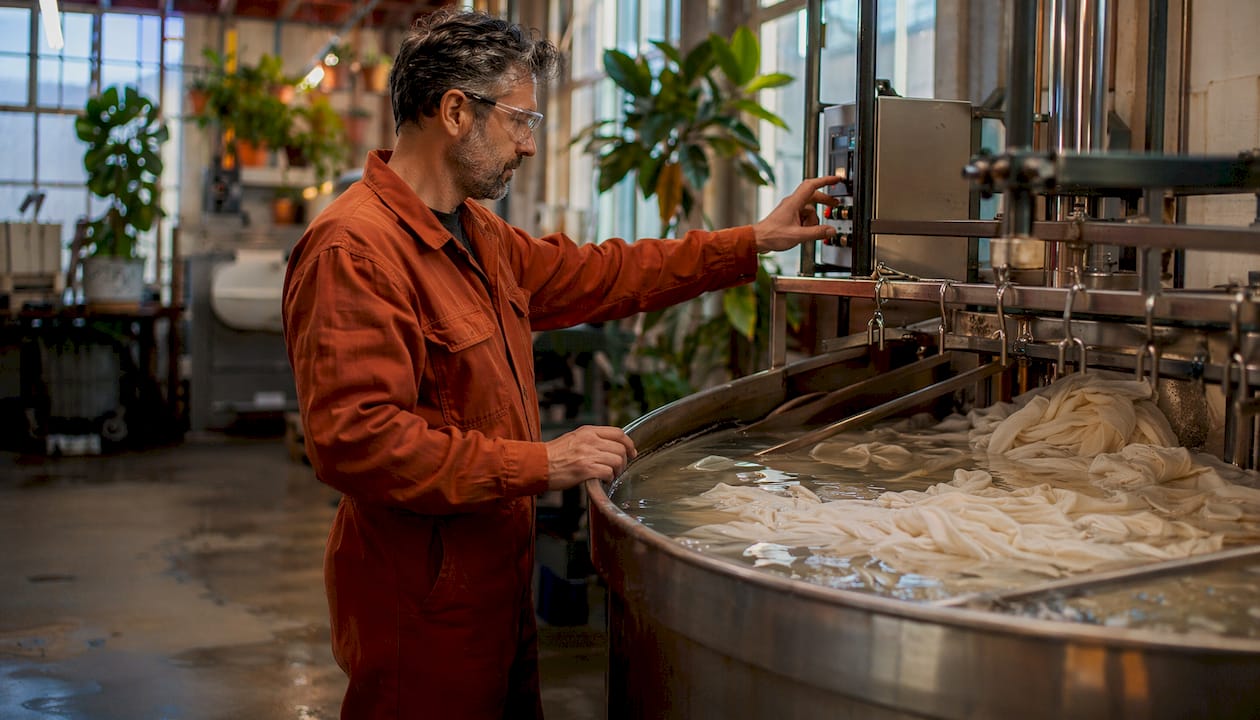
Tension is the other non-negotiable variable. The cotton must be held under mechanical tension throughout the caustic bath to prevent the fibers from contracting. Tension is what creates the round, smooth cross-section and the resulting luster. Without it, the fibers shrink and the sheen disappears entirely.
The treatment itself is fast. Immersion lasts just 20–60 seconds, with the total treatment completed in under four minutes to avoid fiber degradation. After the caustic bath, the fabric passes through a neutralization stage using dilute acid, bringing the pH back to 6–7 before washing and drying.
Tension mercerization vs. slack mercerization
These two approaches produce very different results. Tension mercerization, the standard method, holds the fabric taut and delivers the luster, strength, and dye affinity that mercerized cotton is known for. Slack mercerization intentionally removes tension, which causes the fibers to contract and can shrink cotton by up to 25%. Manufacturers use slack mercerization deliberately to create a stretch effect in cotton fabrics without adding elastane.
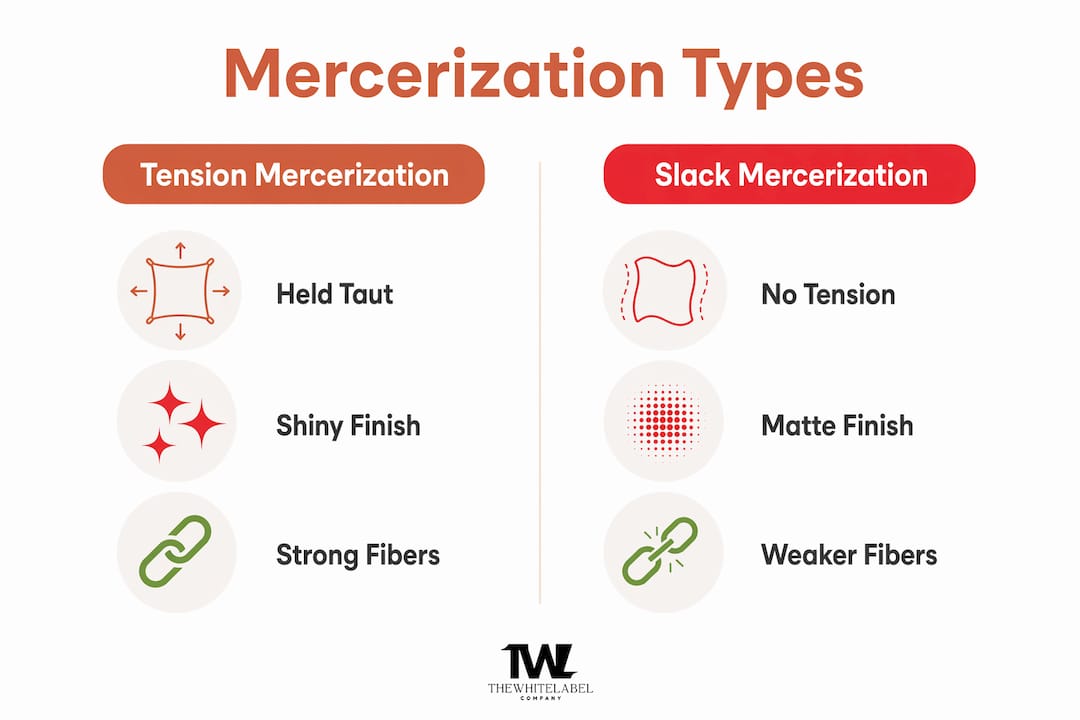
Pro Tip: When buying mercerized cotton products, ask whether tension mercerization was used. Slack-mercerized fabric will not have the same luster or strength, even though both processes use sodium hydroxide.
What are the benefits of mercerized cotton?
Mercerized cotton delivers four measurable improvements over untreated cotton, and each one has a direct impact on how the fabric looks, wears, and lasts.
- Higher dye uptake. Mercerized cotton absorbs 25–50% more dye than untreated cotton due to the swelled, restructured fiber surface. Colors appear deeper, more saturated, and more resistant to fading after repeated washing.
- Greater tensile strength. The process raises tensile strength by 20–40%, permanently. This improvement holds up through multiple wash cycles, measured against ASTM D2256 standards.
- Silk-like luster. The round fiber cross-section reflects light uniformly, producing a smooth sheen that untreated cotton cannot replicate without synthetic blending.
- Reduced shrinkage. Residual shrinkage in properly mercerized fabric stays under 3%, compared to the higher shrinkage rates common in untreated cotton.
- Improved lint and mildew resistance. The denser, smoother fiber surface reduces pilling and resists mildew growth, making mercerized cotton a strong choice for premium everyday wear.
Trade-offs worth knowing
No fabric treatment is without compromise. Mercerization increases production costs by 15–40% compared to untreated cotton, which is why mercerized garments typically carry a higher price tag. The process also reduces softness and drape. Mercerized shirts feel smoother but slightly stiffer than brushed cotton at the same weight.
The moisture dynamics are also worth understanding. Mercerized cotton fibers retain a moisture regain of 9–11%, which is healthy. But the smoother fiber surface reduces capillary action, meaning the fabric feels less absorbent to the touch. This is why mercerized cotton excels in dress shirts and luxury linens but is a poor choice for bath towels, where maximum absorbency matters.
Pro Tip: If you want a T-shirt that holds its color wash after wash and keeps its shape over time, mercerized cotton is worth the extra cost. If you want maximum softness and drape, untreated combed cotton may suit you better.
Common misconceptions about mercerized cotton
The biggest misconception about mercerized cotton is that its luster comes from a surface coating, like a wax or a chemical finish. It does not. The sheen is the result of permanent fiber restructuring, not a topical treatment. This means the shine does not wash out, peel, or fade over time. What you see on day one is what you get on day one hundred.
A second misunderstanding involves absorbency. Shoppers sometimes assume that because mercerized cotton has a high moisture regain percentage, it will feel highly absorbent. The smoother fiber surface actually reduces wicking speed. The fabric is not less healthy for your skin. It simply moves moisture differently than a looped terry or brushed cotton surface would.
Care for mercerized cotton is straightforward:
- Wash in cool to warm water (30–40°C) to preserve the fiber structure and color vibrancy.
- Avoid harsh bleach, which can degrade the cellulose and dull the sheen over time.
- Iron on a medium setting while slightly damp to restore the smooth surface and maintain the fabric’s appearance.
- Turn garments inside out before washing to protect the outer surface from friction.
Pro Tip: Always check that a product is labeled as “mercerized” rather than just “lustrous” or “shiny cotton.” Some finishes mimic the look of mercerization but wash out within a few cycles. True mercerization is a permanent fiber change.
Buying from reputable sources matters here. Brands that control their own production and specify their cotton treatment give you a much clearer picture of what you are actually getting. When you shop for cotton T-shirts in Singapore, knowing how to read fabric descriptions helps you avoid paying a premium for untreated cotton with a surface finish.
How is mercerized cotton used in clothing and home textiles?
Mercerized cotton has earned a consistent place in premium apparel and home textiles because its benefits align directly with what buyers in those categories want: color that lasts, fabric that holds its shape, and a surface that looks polished.
In apparel, the most common applications include:
- Dress shirts and formal wear. The silk-like sheen elevates the visual quality of the fabric without requiring synthetic fibers. A well-made mercerized cotton dress shirt holds its color and structure through dozens of wash cycles.
- Premium T-shirts and everyday wear. Brands focused on quality use mercerized cotton to deliver richer colors and longer-lasting garments. The reduced shrinkage means a well-fitting T-shirt stays that way after washing.
- Knitwear and fine gauge fabrics. Mercerized cotton yarn produces a smooth, even surface in knitted garments, reducing pilling and improving the overall finish.
In home textiles, mercerized cotton appears most often in bed sheets, pillowcases, and luxury table linens. The colorfastness benefit is especially valuable here because these items are laundered frequently. A set of mercerized cotton sheets maintains its color and smooth surface far longer than untreated cotton equivalents.
The trend in 2026 points toward brands combining mercerization with sustainable dyeing processes. Reactive dyes, which bond chemically with the cellulose fiber, work exceptionally well on mercerized cotton because of its higher dye affinity. This combination reduces dye waste and produces deeper colors with less chemical input, which matters to both manufacturers and environmentally aware shoppers.
For brands like TheWhiteLabel, understanding fabric science is part of building products that genuinely perform. The decision to use premium 300GSM cotton reflects the same thinking that drives mercerization: choose the process that delivers lasting quality, not just a good first impression.
Key Takeaways
Mercerized cotton is the most effective way to permanently improve cotton’s luster, strength, dye uptake, and dimensional stability without adding synthetic fibers.
| Point | Details |
|---|---|
| Permanent fiber change | Mercerization restructures cotton at the molecular level; the luster and strength do not wash out. |
| Stronger and more colorfast | Tensile strength rises 20–40% and dye uptake increases 25–50% compared to untreated cotton. |
| Not ideal for towels | The smoother fiber surface reduces capillary action, making mercerized cotton better for apparel than absorbent textiles. |
| Tension is non-negotiable | Without mechanical tension during treatment, fibers shrink by up to 25% and luster is lost entirely. |
| Higher cost, longer life | Production costs rise 15–40%, but the garment holds its shape, color, and structure far longer. |
Our take on mercerized cotton and what it means for buyers
We have spent a lot of time thinking about fabric quality at TheWhiteLabel, and mercerized cotton sits in an interesting position. It is not a luxury material in the way that silk or cashmere is. It is cotton, made better through a controlled chemical process. That distinction matters because it means the benefits are consistent and measurable, not just marketing language.
What we find most valuable about mercerization is the colorfastness. When you invest in a well-made T-shirt, you want the color to look the same after fifty washes as it did when you first wore it. Mercerized cotton delivers that in a way that untreated cotton simply cannot match, regardless of how high the thread count is.
The trade-off on softness is real, and we think buyers deserve to know about it. Mercerized cotton feels smooth and polished, not plush. If you want that ultra-soft, brushed feel, you are looking for a different fabric treatment. But if you want a T-shirt that holds its structure, keeps its color, and looks sharp over time, mercerized cotton is the right call.
The future of mercerization is moving toward tighter process controls and more sustainable dye pairings. Cold mercerization at 15–20°C combined with reactive dyes is already producing results that reduce chemical waste while improving color depth. We are excited to see where that goes, and we are committed to staying close to those developments as we build our collections.
— TheWhiteLabel
TheWhiteLabel’s premium cotton tees: built for lasting quality
At TheWhiteLabel, we build our oversized T-shirts with the same principles that make mercerized cotton worth choosing: quality that holds up, color that stays vivid, and fabric that keeps its shape. Our BW01 Classic Thick 300GSM tee is made from 100% premium cotton, crafted for everyday wear that genuinely lasts. The heavyweight 300GSM construction gives you structure and durability, while the minimalist design keeps it versatile across any outfit. Thousands of customers across Singapore have made it their go-to tee, and we are grateful for every one of them. If you care about fabric quality as much as we do, this is the tee we would point you to first.
FAQ
What is mercerized cotton made from?
Mercerized cotton is 100% natural cotton fiber that has been treated with concentrated sodium hydroxide under tension. The chemical process permanently restructures the fiber but does not add synthetic materials.
Does mercerized cotton shrink after washing?
Properly mercerized cotton has residual shrinkage of under 3%, significantly lower than untreated cotton. The tension applied during the mercerization process stabilizes the fiber dimensions.
Why does mercerized cotton feel less soft than regular cotton?
Mercerization increases fiber strength and smoothness but reduces drape and softness compared to untreated or brushed cotton. The smoother surface feels polished rather than plush.
Is mercerized cotton good for T-shirts?
Mercerized cotton is an excellent choice for T-shirts because it holds color vibrantly, resists shrinkage, and maintains its shape through repeated washing. It is less suited for towels, where high absorbency is the priority.
How can I tell if cotton has been truly mercerized?
True mercerization produces a permanent silk-like sheen that does not wash out. Look for product labels that specify “mercerized cotton” and buy from brands that are transparent about their fabric sourcing and treatment processes.
Recommended
- Best Cotton T-Shirts in Singapore | Shop Guide – TheWhiteLabel
- Premium Oversized T-Shirts Singapore | Why We Chose 300GSM Cotton – TheWhiteLabel
- Premium Oversized Cotton T-Shirt | BW01 Classic Thick 300GSM – TheWhiteLabel
- Types of Materials for Daily T-shirts: A Guide to Comfort and Style - – TheWhiteLabel


