


TL;DR:
- Streetwear is a community-oriented style characterized by bold graphics and limited editions, making a statement. Casual wear focuses on comfort and versatility, with simpler designs and broader appeal across social settings. The two styles differ in cultural origin, design intent, and typical contexts, but trends like oversized fits are blurring their boundaries.
Streetwear is defined as a community-rooted style built on cultural identity, bold graphics, and limited-edition releases, while casual wear prioritizes everyday comfort and broad wearability across social settings. The streetwear vs casual wear difference comes down to intent: streetwear makes a statement, and casual wear keeps things practical. The global streetwear market is valued at $185 billion, representing approximately 10% of the entire global apparel and footwear industry. That number reflects how deeply streetwear has moved beyond a subculture and into mainstream fashion. Knowing the difference shapes how you shop, how you dress, and how confidently you express yourself.
What are the key style differences between streetwear and casual wear?
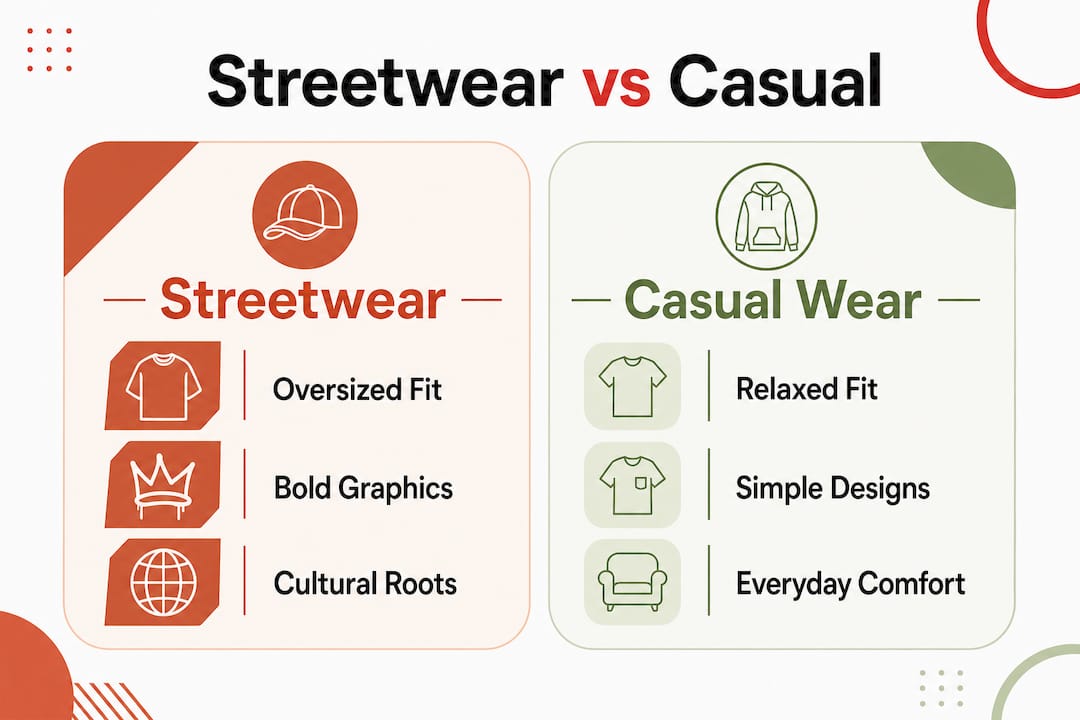
Streetwear and casual wear share some surface-level similarities, but their design intent is completely different. Streetwear staples include baggy silhouettes, high-profile sneakers like Jordan or New Balance, graphic-heavy tees, and hoodies. Casual wear leans on simpler pieces: chinos, polos, jeans, button-downs, and minimalist footwear. The gap between them shows up most clearly in fit, graphics, and branding.
Fit and silhouette
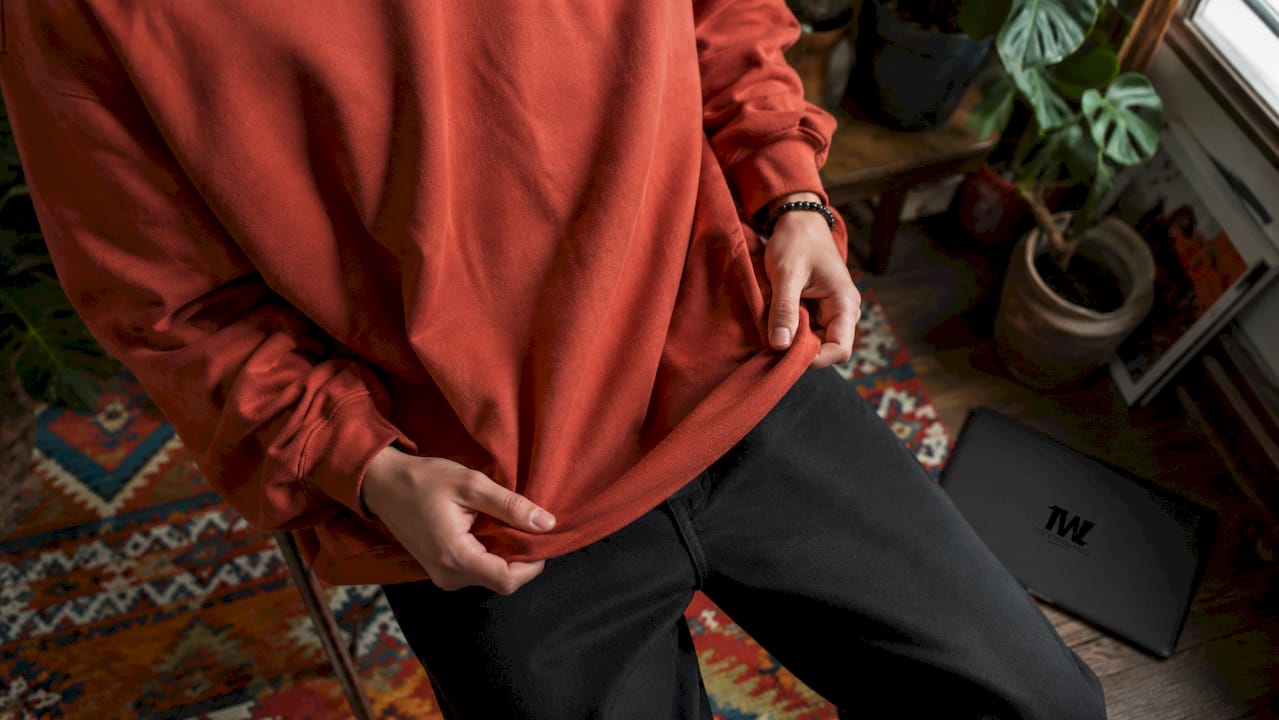
Streetwear favors oversized, exaggerated fits that signal confidence and cultural awareness. Casual wear typically runs closer to the body, with relaxed but tailored proportions. A slim chino and a polo read as casual. A dropped-shoulder graphic tee and wide-leg cargo pants read as streetwear.
Graphics and branding
Streetwear uses graphics as a form of storytelling. Bold logos, art-inspired prints, and cultural references are central to the look. Casual wear styles rely on neutral tones, clean lines, and minimal branding. The goal is versatility, not visual impact.
| Feature | Streetwear | Casual Wear |
|---|---|---|
| Fit | Oversized, exaggerated | Relaxed, fitted |
| Graphics | Bold, logo-heavy, art-driven | Minimal or none |
| Footwear | High-profile sneakers | Clean sneakers, loafers |
| Key pieces | Graphic tees, hoodies, cargos | Chinos, polos, button-downs |
| Cultural signal | Strong subcultural identity | Broad, everyday wearability |
How do cultural origins set streetwear apart from casual wear?
Streetwear’s roots explain everything about how it looks and feels today. Streetwear originated from the intersection of California surf and skate culture, New York hip-hop, and Japanese street fashion in the 1980s. It was defined by community-driven branding and limited releases, not department store shelves. Casual wear, by contrast, evolved as practical everyday apparel with no subcultural ties.
The most important distinction is how each style gains credibility. Streetwear earns legitimacy from the bottom up. Communities validate what is authentic. Limited drops create scarcity, and scarcity creates cultural value. Casual wear earns credibility through mass-market accessibility and functional design.
“Streetwear represents a language of graphic storytelling and cultural identity manifested through scarcity-driven releases and community validation, while casual wear is grounded in mass-market accessibility and broad functionality.”
Source: Streetwear Directory
Streetwear began as a bottom-up cultural phenomenon that rejected top-down fashion control. That origin story still matters today. When you wear a piece with genuine subcultural roots, you are participating in a living tradition, not just wearing a trend. Casual wear carries no such weight, and that is actually its strength. It is approachable, flexible, and free from gatekeeping.
Pro Tip: When building a streetwear wardrobe, research the cultural context behind the brands and graphics you choose. Wearing pieces you understand and connect with reads as authentic. Wearing them purely for aesthetics without context is what the community calls “hype without heart.”
In what contexts do streetwear and casual wear each work best?
Streetwear prioritizes boldness and self-expression with oversized fits and limited-edition drops. Casual wear offers a relaxed, approachable style suited to daily life. Knowing which to reach for depends on your setting, your audience, and what you want your clothes to communicate.
Streetwear fits best in these contexts:
- Creative environments like art shows, music events, and brand activations where self-expression is expected
- Social gatherings with friends who share an interest in fashion culture
- Content creation and social media where visual impact matters
- Streetwear-specific retail spaces and sneaker events where community identity is on display
Casual wear fits best in these contexts:
- Work settings that are business casual or relaxed professional
- Family events and social occasions where broad appeal matters
- Travel where comfort and versatility across multiple settings are priorities
- Weekend errands and daily wear where you want to look put-together without effort
The most interesting styling territory sits between the two. You can pair a casual outfit base of clean chinos and a white tee with one streetwear element like a statement sneaker or an oversized hoodie. That combination reads as fashion-aware without being costume-like.
Pro Tip: The one-item rule works well here. Pick one streetwear statement piece per outfit and build the rest in casual basics. This keeps the look intentional rather than overwhelming.
What are the top 2026 streetwear trends influencing casual fashion?
Oversized tees and hoodies remain key 2026 streetwear trends driving fashion retail and influencing casual wear styling norms. That influence is not subtle. Casual wear brands have adopted dropped shoulders, relaxed fits, and heavyweight fabrics directly from streetwear. The line between the two categories is blurring at the product level, even as the cultural distinction remains sharp.
Streetwear’s move into luxury collaborations has sparked debates about cultural dilution. That tension highlights why authenticity still matters to the core community, even as mainstream fashion borrows freely from streetwear aesthetics.
| 2026 Streetwear Trend | Casual Wear Equivalent |
|---|---|
| Oversized graphic tees | Premium plain oversized tees |
| Wide-leg cargo pants | Relaxed chinos |
| High-profile statement sneakers | Clean minimalist sneakers |
| Acid-wash and heavy-wash denim | Classic dark-wash jeans |
| Layered hoodies and outerwear | Simple zip-up sweatshirts |
The practical takeaway is that investing in quality oversized basics gives you pieces that work in both worlds. A 300GSM heavyweight cotton tee reads as a casual essential on its own and as a streetwear foundation when styled with the right bottoms and footwear. TheWhiteLabel builds exactly this kind of piece, and we have seen our customers wear them both ways with great results.
Key Takeaways
Streetwear and casual wear differ most fundamentally in cultural intent: streetwear communicates identity and community belonging, while casual wear delivers comfort and versatility across any setting.
| Point | Details |
|---|---|
| Cultural origin matters | Streetwear grew from skate, hip-hop, and Japanese street culture; casual wear has no subcultural roots. |
| Design intent differs | Streetwear uses bold graphics and oversized fits to make statements; casual wear prioritizes clean, versatile pieces. |
| Context guides the choice | Streetwear suits creative and community settings; casual wear adapts to work, travel, and everyday life. |
| Trends cross over | 2026 streetwear trends like oversized fits are actively reshaping casual wear styling norms. |
| Basics bridge both styles | Quality heavyweight oversized tees work as streetwear foundations and casual wear essentials. |
Our honest take on knowing the difference
We have spent years thinking about what makes a piece of clothing worth wearing every day. The streetwear vs casual wear conversation is one we genuinely care about, because it shapes how we design at TheWhiteLabel.
Here is what we have found: most people do not need to choose a side. The fashion community sometimes treats these two styles as opposing camps, but that framing misses the point. Streetwear at its best is about wearing something that means something to you. Casual wear at its best is about wearing something that works for your life without effort. A well-made oversized tee does both.
The misconception we see most often is that streetwear requires expensive, logo-heavy pieces to be legitimate. It does not. Authenticity in streetwear comes from cultural awareness and intentional styling, not price tags. A clean, heavyweight cotton tee worn with purpose reads more streetwear than a logo-covered piece worn without context.
We also think casual wear deserves more credit than it gets. Timeless, well-fitted basics are the foundation of every great wardrobe, streetwear included. When you build your wardrobe basics with quality in mind, you create a foundation that supports any style direction you want to take.
— TheWhiteLabel
TheWhiteLabel’s oversized tees for streetwear and casual styling
At TheWhiteLabel, we make premium 300GSM oversized T-shirts that sit comfortably in both worlds. Our tees are built from heavyweight cotton with a relaxed, dropped-shoulder fit that works as a streetwear foundation or a casual daily essential. Thousands of customers across Singapore have chosen our pieces for exactly that versatility. Whether you are putting together a full streetwear look or keeping things simple for the weekend, our oversized tees collection gives you a quality base that holds up. For a streetwear-specific option with urban styling cues, our CS01 streetwear T-shirt is one of our most consistent favorites.
FAQ
What is the main difference between streetwear and casual wear?
Streetwear is defined by cultural identity, bold graphics, and community-driven exclusivity, while casual wear focuses on comfort and broad everyday wearability. The core distinction is intent: streetwear makes a statement, and casual wear keeps things practical.
Is streetwear considered formal or casual?
Streetwear is not formal. It sits in its own category, distinct from both formal and traditional casual wear, defined by subcultural roots and expressive styling rather than dress codes.
What are the key pieces in a streetwear wardrobe?
Core streetwear pieces include graphic tees, oversized hoodies, baggy or wide-leg pants, and high-profile sneakers like Jordan or New Balance. These items reflect the style’s origins in skate, hip-hop, and Japanese street fashion.
Can you mix streetwear and casual wear in one outfit?
Yes. The most effective approach is to anchor an outfit in casual basics like chinos or a plain tee, then add one streetwear statement piece such as an oversized hoodie or bold sneaker. This keeps the look intentional and versatile.
How has streetwear influenced casual fashion in 2026?
Oversized fits, heavyweight fabrics, and relaxed silhouettes from streetwear have directly shaped casual wear trends in 2026. Many casual wear brands now produce pieces that borrow streetwear proportions while keeping the minimal aesthetic of traditional casual styles.


